Jan 30, 2026
It should come as no surprise to those who follow the velvet sector that stags have been culled sooner and in increased numbers on the back of the 2025/26 season’s disappointing velvet prices.
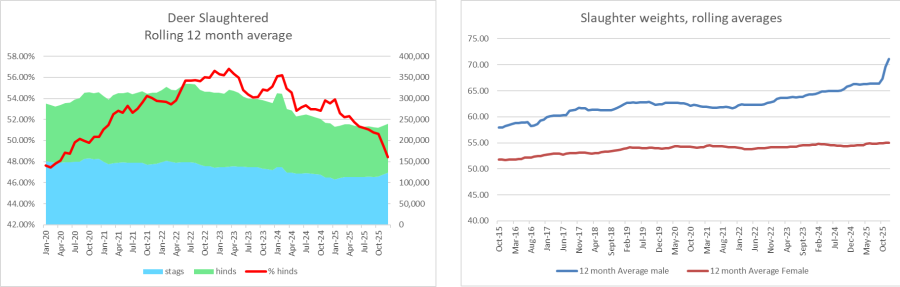
Stag processing numbers were up 25.6 percent in November and 31 percent in December compared with last years figures. Notably, the average weight per stag increased by 16.8 percent in November and 13.5 percent in December. This indicates that a number of older, heavier stags have been culled earlier than normal.
“Over the last couple of months [Nov-Dec], we have seen nearly 10,000 more stags than the previous year pass through the venison processors, with the average weight up six percent on last year’s peak and almost two months earlier,” says DINZ CEO Rhys Griffiths. “If this continues into January and February, and all signs indicate that is likely, then velvet production will be back for the 2026/27 season. By how much remains to be seen, but we're hearing some buyers quoting around 200 tonnes.”
“This gives us an ideal moment to reset supply, shifting emphasis to velvet quality over quantity while venison prices are good. This would align with what I am hearing out of the stag sales, where people are investing for the future amid the shifting market demand dynamics we are seeing.”
Source: DINZ
At the National Velvet Awards held late last year in Invercargill, long-time velvet buyer John Fogarty said he thought the reduction in velvet supply for the 2026/27 season would be close to 200 tonnes, a number reiterated by DINZ Board Vice Chair and PGG National Deer & Velvet Manager Tony Cochrane on The Country podcast in mid-January. When asked recently if he still thought that, however, Fogarty floated a possible revision to his previous comments.
“My gut feeling after talking to clients and listening to what’s going on, and I don’t have any figures to base this on mind you, but I’m thinking I might even be underestimating the reduction this year,” says Fogarty. “I think it could be down another 50 tonnes from my initial 200-tonne estimate. This is because of people cutting shorter, averaging less kilos per animal, and the amount of stags going to processors after first cut, so there’s a lack of regrowth. So yeah, a bit of a wait and see, but I’d guess somewhere between 200 and 250 tonnes removed from the overall supply.”
DINZ will continue monitoring processing data over the coming months, with a more comprehensive update planned for release in the State of the Industry report, to be released in the first half of 2026. This will include processing volumes and weights, alongside wider trends and insights relevant to deer farmers. While the exact timing and content is still being confirmed, the aim is to provide farmers with a clear, practical picture of how the industry is tracking and what trends should be considered for the rest of the year.