Oct 30, 2026
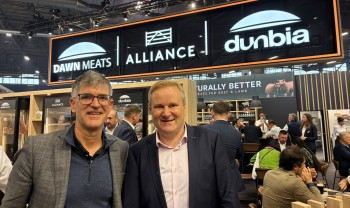
Terry Meikle (left) with Dale Crammond, Director of Meat Industry Ireland, at SIAL in Paris.
By Terry Meikle, DINZ Markets Manager
After returning from my first market visit to Europe as DINZ Markets Manager, I have been reflecting on the conversations, observations and lessons gathered over several weeks on the ground.
The trip had three major objectives. First, to meet with importers, distributors, retailers, foodservice operators, and industry partners across some of New Zealand farmed venison's most important export markets. Second, to spend time with DINZ's Europe-based chef ambassador, Shannon Campbell, whose market knowledge, industry connections, and understanding of the European market continue to be invaluable. Third, to attend SIAL in Paris, one of the world's largest food trade exhibitions.
While every customer and market has its own priorities, the overall message from Europe was consistent: New Zealand farm-raised venison continues to occupy an enviable position in the market.
There are challenges ahead, as there always are, but there are also genuine reasons for optimism.
Demand remains ahead of supply
Perhaps the strongest observation from the trip was the continued demand for New Zealand farmed venison.
Across multiple conversations, customers spoke positively about the product and, in many cases, expressed a desire for greater volumes, particularly chilled venison during peak periods.
Venison occupies a different position to many other red meat proteins. Rather than competing as a commodity, it largely exists within premium and niche segments where strong relationships, quality, and reliability matter.
The question being asked by many customers was not whether they wanted New Zealand venison, but whether sufficient supply would be available.
That continuing demand is an important signal for deer farmers as the industry moves from a period of contraction towards stabilisation and, ultimately, growth.
Our reputation continues to matter
Another recurring theme was the value attached to New Zealand's reputation.
Customers regularly pointed to the qualities they most associate with New Zealand farmed venison: quality, consistency, food safety, traceability, and trust.
These attributes have become increasingly important as greater volumes of wild-shot venison enter parts of the European market. While wild venison has its own place and story, the growth in supply reinforces the need for New Zealand farmed venison to clearly articulate what makes it different.
The industry's ability to demonstrate provenance and tell a compelling production story remains one of its greatest competitive advantages. This is particularly true when it comes to putting the carbon miles argument finally to bed - it is imperative that we provide the market with evidence that we intuitively know to be true, in order to refute this argument.
There was also considerable interest in work underway through programmes such as Thrive 35, particularly around nutrition, consumer insights, and strengthening the market proposition of New Zealand farmed venison.
What became clear throughout the trip was that quality alone is no longer enough. Customers increasingly want supporting evidence, assurance, and authenticity alongside the product itself.
Sustainability Is becoming broader
One of the surprises for me was how broadly sustainability is now being interpreted by customers and value chain partners.
Environmental performance remains an important topic, but conversations increasingly extended beyond carbon emissions and biodiversity outcomes.
There was significant interest in integrity, transparency, assurance systems, and understanding how products are produced and packaged.
In many respects, sustainability is becoming shorthand for trust.
That creates opportunities for New Zealand. Our farming systems have a strong story to tell, but there is also growing expectation that claims are supported by data, evidence, and verification.
Relationships still drive success
If there was one lesson that became increasingly obvious the longer I spent in market, it was the value of relationships.
European venison value chains are highly interconnected and often built on partnerships that have developed over decades. Many European partners are multi-generational family businesses. Trust remains critically important, and the willingness to invest time in maintaining relationships continues to deliver benefits.
This was particularly apparent while travelling with Shannon. His deep understanding of customers, chefs, cultures and market dynamics highlighted just how important local knowledge remains.
At the same time, the trip reinforced the need to focus resources carefully.
The deer industry cannot be all things to all people, nor can it pursue every opportunity that presents itself. Long-term success will depend on maintaining strong alignment between DINZ, exporters, and market partners while investing in initiatives that generate sustainable returns for the industry.
Looking beyond the traditional season
The other major opportunity discussed repeatedly throughout the trip was seasonality.
In many continental European markets, venison remains closely associated with the traditional game season. That association has served the industry well for decades, but it also creates limitations.
Several customers expressed interest in further exploring opportunities to broaden consumption beyond autumn and winter, particularly around summer outdoor dining and grilling occasions.
This is not a new conversation for the industry. Previous efforts have tested similar concepts, with varying levels of success.
What felt different this time was the level of interest from larger partners willing to revisit the challenge.
Successfully expanding consumption occasions remains a significant opportunity for future growth and is an area that warrants continued attention.
A window into the future at SIAL
The final component of the trip was attendance at SIAL in Paris, where thousands of food businesses from around the world gathered to showcase products, explore trends, and discuss the future of global food markets.
For New Zealand farmed venison, the exhibition offered an opportunity to better understand the evolving landscape in which we compete. With no direct competitors present, it served as a useful reminder of the unique space New Zealand venison occupies within the global protein landscape.
More generally with hall after hall filled with packaged, processed and highly formulated food products, the exhibition reinforced just how crowded the modern food marketplace has become.
The takeaway was simple: proteins that remain close to their source and are supported by an authentic, compelling production story are likely to enjoy an increasingly valuable point of difference in the years ahead.
Moments that stood out
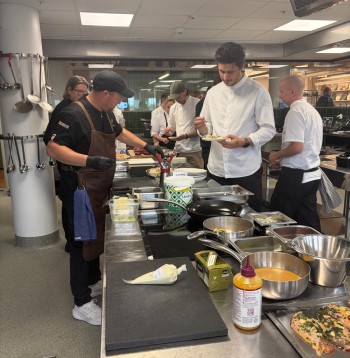
Shannon Campbell giving a chef demonstration in Sweden
While market trends and commercial discussions were important, some of the most valuable insights came from seeing New Zealand farmed venison positioned within real-world settings.
While in Sweden, I was fortunate to witness Shannon giving a chef demonstration event to fifteen head chefs of the Strawberry Hotel Group – the leading hotel chain in Scandanavia. This event was hosted in the test kitchen of Martin & Severa, Sweden's leading food service wholesaler and supplier. This demonstration served to highlight the importance of educating consumers on the unique flavour profile of New Zealand farm-raised venison; the need to think beyond traditional usage for specific meat cuts; and to tell an evidence-based story on the efficiencies of the New Zealand farm-raised venison supply chain.
We also visited Hanos, a leading Dutch food service wholesaler and long-standing partner. Shannon had recently undertaken a series of chef masterclasses (in-person and online) across several Hanos stores, which included pairings of New Zealand wines done by a professional sommelier. The size, scale and reach of Hanos with its in-store chefs, screens, brochures, social media, special promotion calendars, in-house magazine, and professional recipe platform was truly impressive.
From an industry perspective, it is these in-market partnerships that will help drive consumer and exporter change toward new product development and 12-month consumption patterns across Europe. Indeed, in a positive sign, some of these import supply chain partners are reporting shifts in peak sales outside traditional game season.
Reasons for confidence
One takeaway stood above all others: Europe continues to value New Zealand farm-raised venison.
Customers trust the product, recognise its quality, and want to see continued supply. While competition from other proteins, economic pressures, and supply constraints remain realities, the industry's underlying position appears strong.
For me, that was perhaps the most encouraging lesson from the trip.
The opportunity now is to continue building on that foundation by strengthening our story, investing in our relationships, and ensuring farmers remain connected to the changing needs of our customers.
The conversations taking place in Europe today provide every reason to believe there is a positive future ahead for New Zealand farmed venison.