Jun 26, 2026
Deer Industry New Zealand (DINZ) welcomes Federated Farmers’ recent five-point election platform, noting strong alignment with many of the priorities that our sector has been advocating for over several years.
At a high level, there is broad agreement on the need to reduce the cost of farming, streamline compliance, and create a more enabling environment for farmers to operate. However, as always, the detail matters, and it’s important that policy settings recognise the diversity of farming systems, especially the unique characteristics of deer farming.
A key area of alignment is the push for national direction, paired with regional flexibility. National standards provide clarity, consistency, and certainty for farmers operating across different regions, but they must be supported by settings that recognise local conditions and allow for practical, place-based implementation.
Overall, regulators must be clear what their policies are trying to achieve and ensure that rules are addressing the desired outcomes, rather than going down the easier path of mandating proxy measures. Blanket, one-size-fits-all rules don’t deliver good outcomes, particularly for smaller sectors.
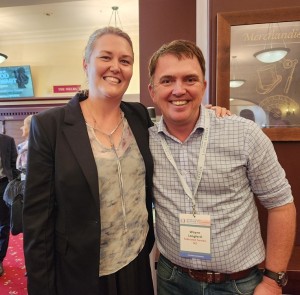
DINZ Environmental Stewardship Manager Luka Jansen with outgoing Federated Farmers president Wayne Langford
Reducing the compliance burden through Resource Management Act reform is another area of shared focus. DINZ has long advocated for a more pragmatic, risk-based approach; one that recognises that farmers understand their risks ands allow them to develop the appropriate plans so they can get on with farming. Effort should be focused on lifting standards where needed and addressing non-compliance, while enabling well-run farms to continue contributing strongly to the economy, through exports, employment, and vibrant rural communities.
On farm plans, the direction of travel is clear. While there might be differing views on how they should be implemented, farming is operating within a global environment where expectations have shifted significantly. New Zealand’s markets, particularly the European Union as a key market of NZ farmed venison, increasingly expect robust environmental assurance, and these expectations are unlikely to reverse. And besides compliance-based market expectations, good environmental stewardship is simply good farming—protecting land and water resources for future generations.
The conversation around local government reform also warrants careful consideration. DINZ sees value in improving efficiency, reducing duplication, and delivering clearer accountability through reform. At the same time, sufficient representation and ongoing engagement between farmers and councils remains critical. Councils are often working within complex systems, and constructive engagement can help ensure that policies are both practical and effective on the ground.
More broadly, there is an ongoing need to bridge the urban–rural divide. As fewer New Zealanders than ever before have direct experience or interactions with farming, understanding of the sector’s role in underpinning the national economy can diminish. That said, with that importance comes responsibility. Farmers operate within a shared social and environmental framework, and maintaining public trust is essential.
Overall, it is encouraging to see alignment across key themes. The next step is ensuring that policy design and implementation reflect the practical realities on farm, so that farmers are supported to do what they do best: producing high-quality food and fibre for global markets while sustaining the land for the future.
Deer farmers are a core part of the farming community, yet deer farming systems differ in meaningful ways from other livestock sectors, particularly in how deer interact with land and environments. Policy settings need to reflect those differences to ensure fair and effective outcomes for our industry.