Jun 26, 2026
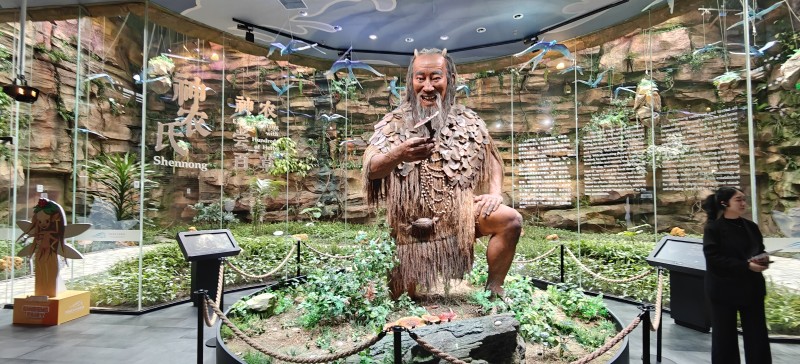
A giant sculpture of Shennong—the “Divine Farmer”, a Chinese deity and the patron of TCM practitioners—at the Guangdong-Macao Traditional Chinese Medicine Cultural Experience Centre Center in Hengqin, southern China.
A recent visit to the Guangdong-Macao Traditional Chinese Medicine (GMTCM) Park in Hengqin by Deer Industry New Zealand (DINZ) representatives JongKyu Jang (Regional Manager, South Korea) and Felix Shen (China), together with representatives from Alpine Deer, has provided fresh insight into the evolving landscape for deer velvet in China—and where New Zealand may fit within it.
Located within the Greater Bay Area (an area in southern China made up of Hong Kong, Macao and Guangdong Province, with a population of 88 million), Hengqin is a strategically important zone designed to connect mainland China with the Special Administrative Regions of Hong Kong and Macao, as well as international markets that include Portuguese-speaking countries (as Macao was once a Portuguese colony). With regulatory advantages for food supplements and traditional Chinese medicine (TCM), it presents a potential pathway for introducing high-quality New Zealand deer products into new formats and channels.
The visit, hosted by GMTCM Park Chairman Ricky Cheung, focused on understanding this policy environment and exploring partnership opportunities. Cheung has maintained strong connections with New Zealand over many years, making the engagement particularly valuable as DINZ looks to build relationships with trusted partners working within the TCM sector.
The programme itself offered an immersive introduction to the scale and ambition behind China’s investment into TCM. A tour of the TCM Cultural Experience Center, discussions with industry representatives, and visits to flagship retail outlets all reinforced the importance of TCM as both a cultural cornerstone and a modern growth sector.
“The center felt incredibly modern, almost futuristic,” said Jang, visiting from South Korea. “The scale was enormous, and the level of detail was extraordinary. I had seen videos and photos many times beforehand, but being there in person made me realise that images online simply cannot capture the full experience. It is something you really have to visit and see for yourself.”
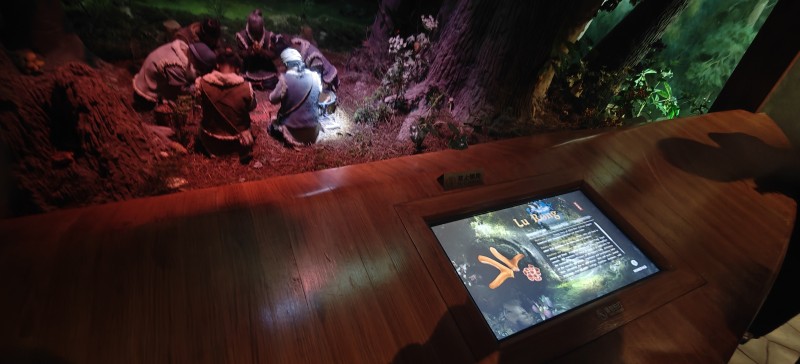
A display on lu rong, or deer velvet, at the TCM Cultural Experience Centre.
A notable highlight was the involvement of Wētā Workshop co-founder Sir Richard Taylor in the development of the Cultural Experience Center, adding a world-class storytelling dimension to the site.
Discussions throughout the visit centred on the potential role of New Zealand deer velvet within both TCM and modern supplement markets. GMTCM Park representatives expressed strong interest in deer velvet and co-products, particularly as Hengqin’s regulatory framework may allow faster development and registration of certain supplement products. This creates an opportunity to use New Zealand velvet as a premium raw ingredient in value-added products targeting not only mainland China, but also Hong Kong, Macao, and international consumers.
A key theme was the importance of provenance. Within TCM, the concept of daodi—loosely translated as “authentic, genuine and true to its place of origin”—remains a core marker of quality. Traditionally, deer velvet has been associated with China’s northeast, yet demand is increasingly concentrated in the south. This shift highlights an opportunity to position New Zealand velvet differently: not as a traditional origin, but as a premium, trusted source aligned with modern consumer expectations.
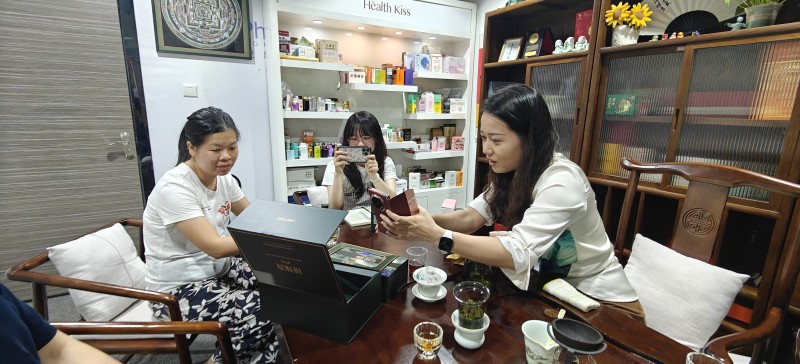
Representatives from Nutrasource Guangsha Biotechnology look over the premium packaging of HENKIV, the health functional food product launched in South Korea earlier this year. The packaging plays a video promoting the provenance of New Zealand velvet once opened.
Consumption formats are also evolving. While sliced velvet remains the dominant format, there is growing interest in more accessible supplement products that expand usage occasions. Macao was identified as a market where premium positioning could resonate with affluent consumers. As part of Macao's diversification strategy to reduce its heavy reliance on the casino/gaming industry, TCM is a central component of the "big health” pillar of its 1+4 model. As such, Macao could also serve as a fertile testing ground for new product development and in taking TCM to the world.
At the same time, challenges remain. Regulatory barriers in mainland China make it difficult to register new TCM and health food products, and awareness of New Zealand deer products is still limited. As a result, alternative pathways such as cross-border e-commerce and partnerships in Hong Kong and Macao may play an important role in early-stage market development.
Insights from South Korea—where velvet has successfully transitioned into modern formats—were also discussed, though with the recognition that China will require a different approach. Consumer preferences, product usage, and industry structures differ significantly, meaning Korean examples are best viewed as reference points rather than direct models.
In this context, DINZ Markets Manager Terry Meikle says the DINZ team in Asia will be targeted in this southern region of China, Macao and Hong Kong in the coming months, sharing Korean success stories and continuing to foster and develop strategic relationships with key company partners.
Overall, the visit reinforced a clear direction. For New Zealand, the greatest opportunity lies not in competing within commodity supply chains, but in building relationships with partners who value provenance, storytelling, and innovation. Through platforms like GMTCM Park, there is growing potential to position New Zealand velvet as part of a premium, globally relevant offering—grounded in tradition but shaped for the future.